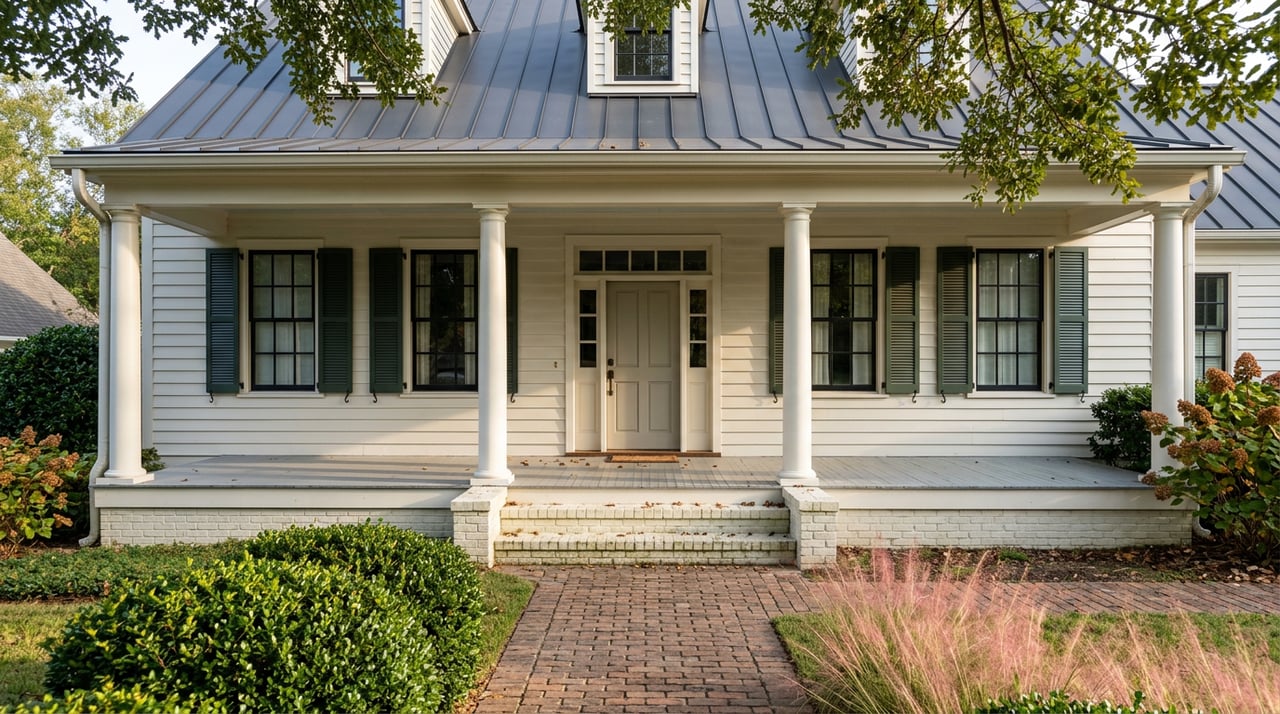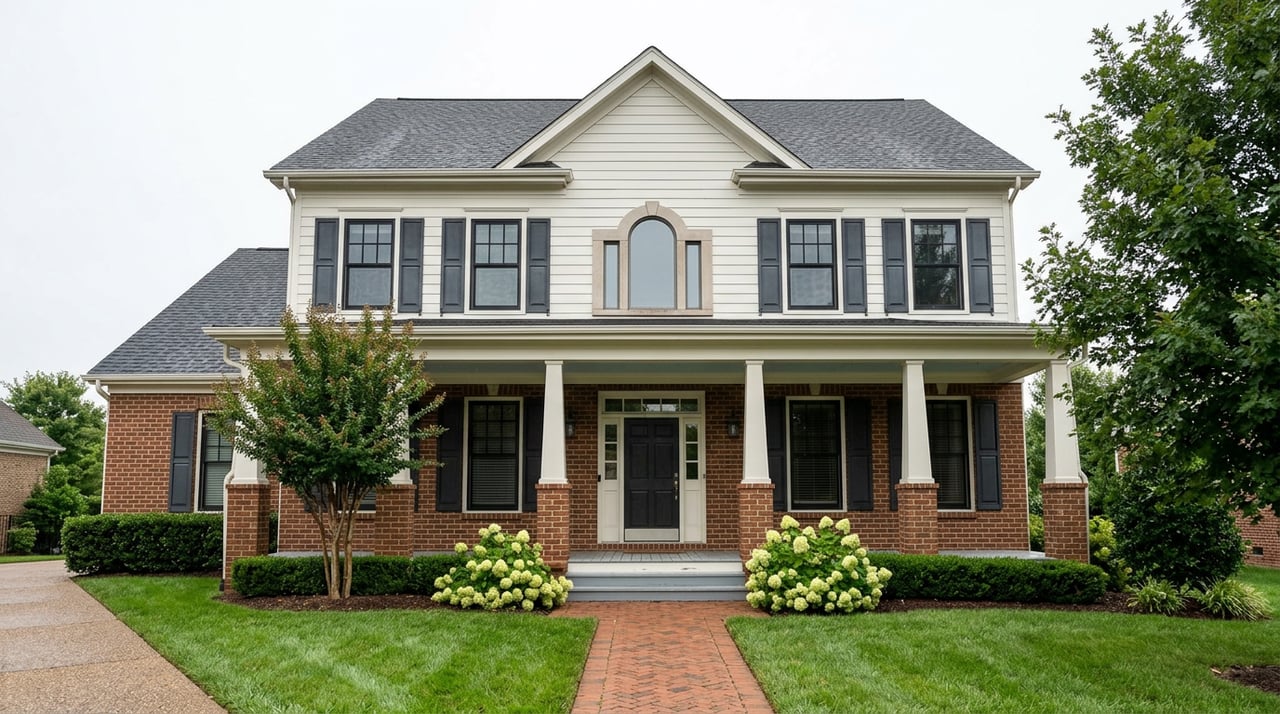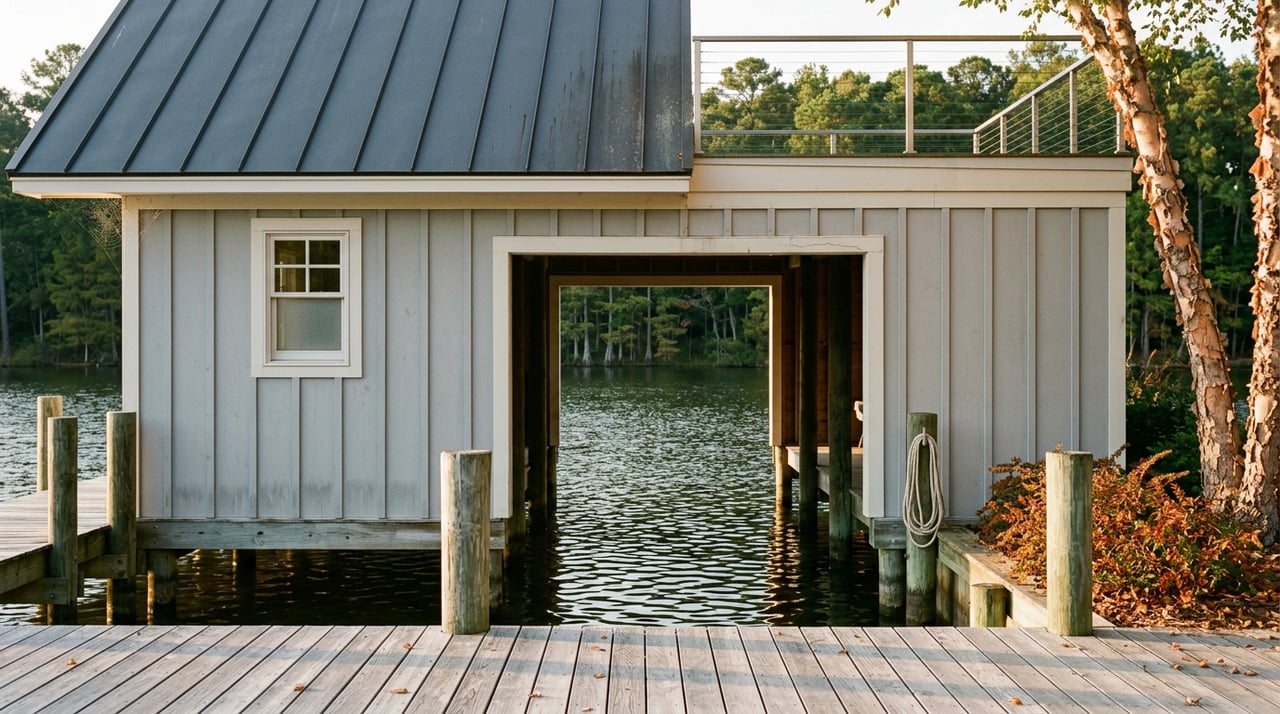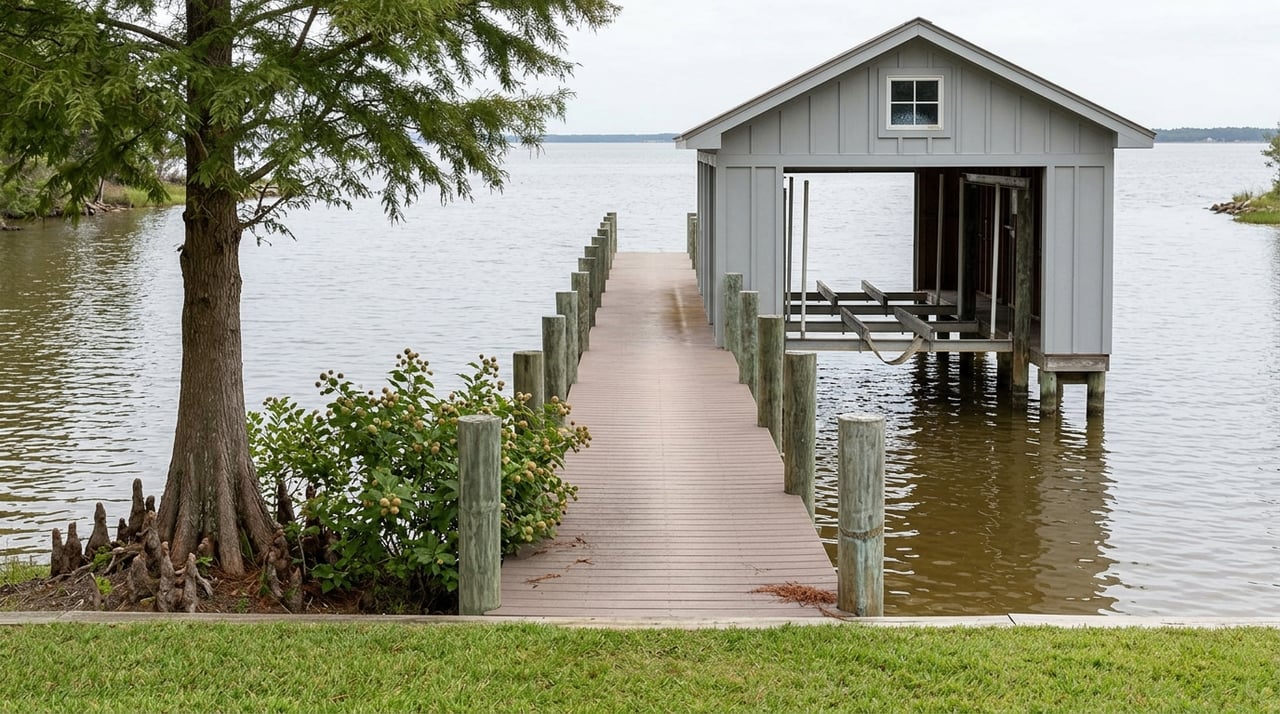
Every Lake Gaston listing says some version of the same thing: single boathouse conveys, private pier included, boat lift stays with the home. Buyers read that language as a fact about the property they're purchasing. It isn't. The dock, the pier, the boathouse sitting in front of that home is built on land the seller has never owned, licensed by a company that can revoke, modify, or decline to transfer that permission at any point. The house is real property. The thing tied to the dock is a license from Dominion Energy, and licenses don't convey the way a deed does.
This isn't a technicality that only matters to lawyers. It's the reason some Lake Gaston closings take longer than either side expected, and the reason a handful of buyers each year end up owning a boathouse they can't legally rebuild.
You're Buying a House. You're Licensing a Dock.
Lake Gaston is a reservoir. Dominion Energy built the dam, flooded the valley, and still owns the land beneath the water and the shoreline up to what's called the project boundary, an elevation line that runs from 204 feet above sea level near the Gaston Dam to 217 feet near Kerr Dam. Everything below that line, including the ground a pier or boathouse sits on, belongs to Dominion, not to the person whose name is on the deed next to it.
A Dominion reservoir official put it plainly at a public meeting years ago: there are no waterfront property owners on Lake Gaston. Dominion owns the shoreline, and residents are simply permitted to build structures on it under a Shoreline Management Plan required by their federal hydropower license.
That distinction matters at closing because a seller can't convey what they don't own. What they can convey is a Construction and Use License, the document Dominion issues that gives a specific person permission to use a specific structure at a specific location. That license is what actually needs to change hands, and it doesn't happen automatically just because a deed does.
What Actually Transfers, and What Doesn't
Dominion's own staff have said the license is designed to transfer from landowner to landowner when a property sells. In practice, that transfer has to be requested and processed. Nothing forces it to happen at the closing table, and if it doesn't happen, the new owner is left using a structure under a license that's still in the previous owner's name.
Before writing an offer on a Lake Gaston waterfront property, a buyer's side should confirm four things:
- A Construction and Use License exists for the dock, pier, or boathouse currently on the lot, and it's on file with Dominion.
- The metal identification tag on the structure is legible. Dominion uses that tag to track permitting history, and a missing or faded tag can stall a transfer until a new one is issued.
- The structure's footprint, height, and setbacks match what the license describes. Dominion caps most single-family docks and boathouses at 1,250 square feet, with sundecks or A-roofs limited to 16 feet above the water surface at 200 feet MSL, and structures generally set back at least 15 feet from a neighboring extension line.
- The license is being formally reassigned to the buyer, not just informally carried over because the seller mentioned it verbally.
Skipping this step doesn't just create paperwork problems. It creates a structure the new owner may not be allowed to insure, repair, or rebuild under their own name until the license catches up.
The Rule That Decides Whether a Storm-Damaged Dock Gets Repaired or Removed
Here's where the license framing has real financial teeth. Dominion's Construction and Use Procedures allow an owner to maintain an existing structure without a new permit as long as 50 percent or less of it needs repair. Cross that threshold and the calculus changes: anything more than 50 percent destroyed has to be removed, and rebuilding requires a fresh permit under whatever construction standards are current at the time, not whatever standards were in effect when the original structure went up.
That creates a real gap for structures built before February 1, 1998. Dominion classifies pre-1998 structures without a license, or structures that no longer match current specifications, as nonconforming. A nonconforming boathouse can often stay in place under grandfather protection for its useful life, but the moment it's more than half destroyed, that protection ends. The replacement has to meet today's footprint and height rules, which may be smaller than what's there now.
For a buyer, that means a beautiful older boathouse that looks like a permanent fixture of the property is really a countdown clock tied to storm damage, not a guaranteed asset. It's worth asking a seller directly whether the structure is licensed and conforming, or grandfathered and nonconforming, before treating it as a like-for-like replacement value in a purchase price.
What a New Permit Actually Costs
For lots without an existing dock, or buyers planning to replace one, Dominion permit fees for a new or modified structure typically run in the range of $600 to $800 depending on project scope, according to Lakeland Pier and Boathouse Company, a Littleton, North Carolina contractor that has built docks and boathouses on Lake Gaston since 1998. That figure covers the Dominion application itself. It doesn't cover the survey needed to establish where a buyer's property ends and Dominion's begins, which is the only reliable way to confirm where a new structure can legally sit.
A permit, once issued, is valid for 12 months, and the structure has to be completed within that window. An approved-but-unbuilt permit doesn't carry grandfather protection if it expires before construction happens, which is a detail that matters for anyone buying a vacant waterfront lot with a permit already in hand from the previous owner.
The Rules Just Got a Fresh Look
Dominion's Shoreline Management Plan operates under a license from the Federal Energy Regulatory Commission that requires public input and review every five years. The most recent round happened in September 2025, with two public meetings held at Lake Gaston Baptist Church in Littleton, one on September 23 and one on September 30, where Dominion accepted comment on the plan and procedures currently governing every dock, pier, and boathouse on the lake.
That timing matters for anyone closing on a Lake Gaston property in 2026. The construction and use rules a buyer inherits right now are the version that underwent its statutory review last fall, not a document that's been sitting untouched for years. Buyers and their agents should treat the current rule set as the live version, and sellers with older permits or informal arrangements should expect more scrutiny at closing than they might have faced a decade ago.
Why This Shows Up in the Numbers
The friction around dock permitting doesn't show up as a separate line item in market reports, but it's part of the story behind slower waterfront closings. According to Roanoke Valley Lake Gaston Board of REALTORS MLS data, waterfront homes sitting on the market in 2025 took 44 percent longer to sell than they did in 2024. Total dollar sales across the lake still grew, reaching $225.7 million in 2025 across 435 closed transactions on homes and lots, an increase of just over 10 percent from 2024's $204.7 million and 431 transactions. But waterfront lot dollar sales actually fell nearly 23 percent over the same period, and in the first three months of 2026, waterfront lot sales were down another 29 percent even as overall unit sales across homes and lots rose 17 percent from the same period in 2025.
None of that is proof that permit issues alone are slowing lot sales. It does suggest that undeveloped waterfront lots, the properties most likely to have unclear or nonexistent dock licensing, are moving more cautiously than homes that already have a documented structure in place. A clean, transferable license is one less unknown for a buyer weighing a lot purchase against a home that already comes with a working dock.
A Few Questions Worth Asking Before You Write an Offer
Does the Dominion permit transfer automatically when I buy the home? Dominion designed the license to move from owner to owner at sale, but that transfer has to be requested and processed. It isn't a byproduct of the closing itself.
What if the boathouse predates the current rules? Structures built before February 1, 1998 without a license may qualify as nonconforming or grandfathered, which lets them remain in place, but that protection ends if more than half the structure is damaged and needs rebuilding.
Can I repair storm damage without a new permit? Yes, as long as 50 percent or less of the structure needs repair. Past that threshold, the structure has to come down and be rebuilt under current standards.
What should I budget for a new dock or boathouse permit? Plan on roughly $600 to $800 for the Dominion application itself, plus the cost of a survey to establish the property boundary before any drawings are submitted.
A dock adds real value to a Lake Gaston home, but the paperwork behind it deserves the same scrutiny as the roof or the septic system. Buying the house is straightforward. Making sure the license for everything sitting in the water in front of it actually becomes yours takes one more phone call before you sign.
If you're weighing a waterfront purchase or getting ready to list one, Lake to Coast Real Estate can help you sort out exactly what's licensed, what's grandfathered, and what needs attention before it becomes a closing-day surprise. Schedule a consultation with Neal Anderson to walk through your specific property before you go under contract.