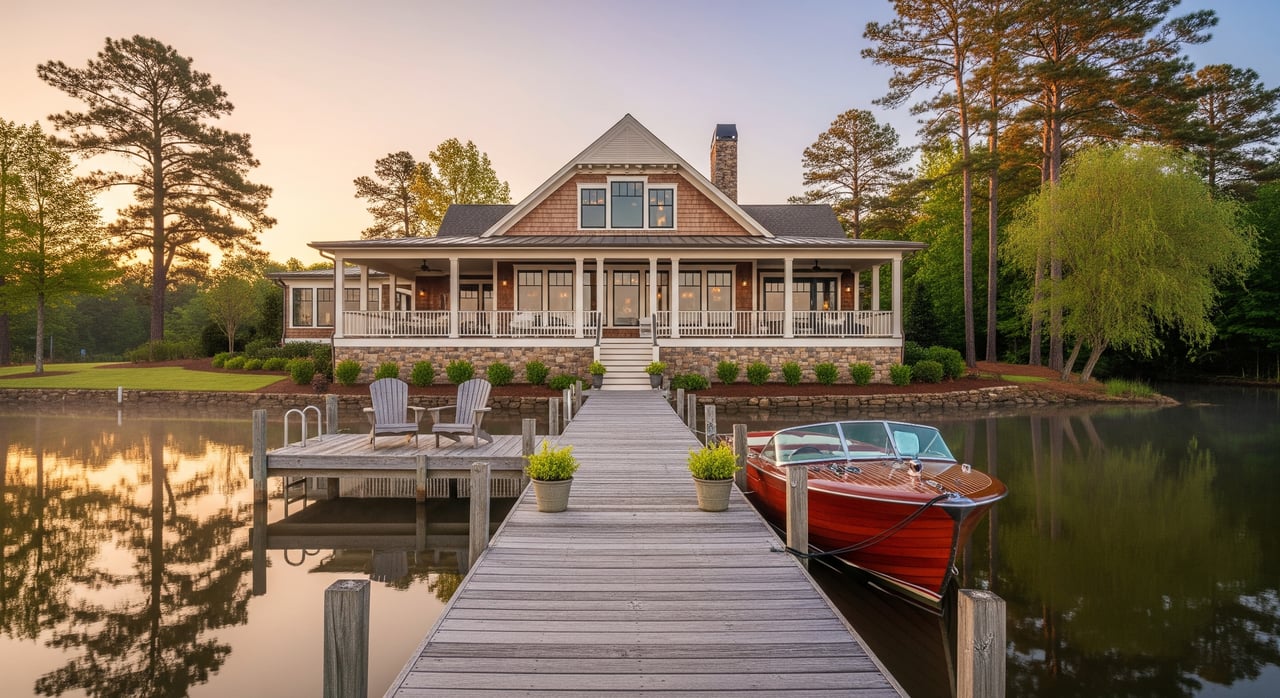
Buying a Lake Gaston home can feel like a dream come true, but the purchase price is only part of the story. If you are planning for a full-time move, a weekend getaway, or a rental property, the real monthly and annual costs can look very different from a typical inland home. When you understand those costs early, you can buy with more confidence, protect your budget, and avoid unwelcome surprises after closing. Let’s dive in.
Why Lake Gaston ownership costs more
A Lake Gaston home often comes with extra layers of ownership costs beyond your mortgage, insurance, and basic upkeep. Waterfront living can include county taxes, utility bills, septic or well maintenance, dock-related expenses, shoreline permit fees, and seasonal wear that may not affect a non-waterfront property in the same way.
That does not mean lake ownership is a bad financial move. It means you should budget for the property you are actually buying, not just the listing price you see online. A thoughtful budget helps you enjoy the lifestyle while staying realistic about long-term costs.
Northampton County property taxes to plan for
If you are buying in Gaston in Northampton County, county property taxes should be one of the first line items in your budget. According to the North Carolina Department of Revenue, the 2025 to 2026 Northampton County tax rate is 0.8250 per $100 of assessed value.
That means a home assessed at $500,000 would have about $4,125 in county tax before any special district charges. Some parcels may also include special-district or fire-district taxes, so it is important to verify the specific parcel instead of relying on a rough estimate alone.
Tax timing matters too. Northampton County tax bills are due on September 1, and interest begins after January 5. If you are planning cash flow for a second home or investment property, it helps to know when that bill hits.
Rental taxes can affect your income plan
If you plan to use your Lake Gaston property as a short-term rental, Northampton County’s occupancy tax needs to be part of your numbers from day one. The county levies a 6 percent occupancy tax on the rental of rooms, lodging, campsites, and vacation homes.
This tax does not apply to stays of 90 or more consecutive days. For short-term rental owners, though, it is an operating cost that can affect pricing, projections, and net income. It is much better to build it into your budget upfront than to treat it like an afterthought.
HOA dues and parcel-level charges matter
Some Lake Gaston properties are located in private communities or neighborhoods with homeowners association dues. These fees are not countywide, so they can vary a lot depending on the subdivision, amenities, and property type.
That is why document review matters. Before you close, confirm whether the property has HOA dues, what those dues cover, and whether there are any additional assessments. Even modest recurring fees can change the true cost of ownership over time.
Utility costs may be higher than expected
Your utility budget at Lake Gaston may not look like your budget in a typical suburban neighborhood. Northampton County Public Works publishes a residential rate schedule showing a $23.50 water base charge and an $18.00 sewer base charge, which means a home with both services active pays at least $41.50 per month before any water usage.
Those rates are tiered, so higher summer usage can push bills up faster than you might expect. If you host guests often, irrigate landscaping, or use the property heavily during peak lake season, your monthly costs may rise well above the base amount.
Electricity is another meaningful line item. The U.S. Energy Information Administration reported North Carolina’s average residential electricity price at 13.68 cents per kilowatt-hour in January 2026. In a lake home, power costs can climb with HVAC use, dehumidifiers, pumps, and dock equipment.
Septic and well costs are easy to overlook
Many buyers are used to city water and sewer, but that is not always the setup around Lake Gaston. The Northampton County area report for Gaston showed many water service connections tied to septic systems in 2024, which suggests that septic is common even when county water is available.
For you as a buyer, that means your real utility budget may include more than monthly bills. It can also include septic pumping, inspections, water testing, and occasional well or pump repairs depending on the property.
Northampton County Environmental Health includes septic tank system inspections among its services. That makes septic due diligence especially important before closing, since a system issue can become a costly problem if it is missed.
What septic maintenance may cost
Routine septic maintenance is a recurring ownership cost, not a one-time event. The Environmental Protection Agency says routine maintenance is typically needed every 3 to 5 years and often falls in the $250 to $500 range.
Repairing or replacing a failed conventional system can cost much more. North Carolina health guidance also advises homeowners to have a septic maintenance plan, which is a smart way to avoid larger issues later.
Waterfront upkeep needs a larger reserve
One of the biggest differences between a lake home and a non-waterfront home is the need for a stronger maintenance reserve. Water, weather, changing lake levels, and shoreline rules can create both expected and unexpected costs over time.
Dominion Energy notes that normal Lake Gaston water levels are typically maintained between 199 and 200 feet, but levels can change without notice. Flood-control operations can also cover docks and inundate yards above 200 feet depending on the property’s elevation.
That matters because your dock, lift, shoreline, and outdoor structures may need more regular attention than you would expect at an inland property. A waterfront house may be more fun to own, but it usually is not cheaper to maintain.
Dock and shoreline permit fees to know
If a property has a dock, boathouse, lift, riprap, or other shoreline improvements, permit rules are part of the ownership picture. Dominion Energy requires shoreline use permits, and its fee schedule includes a $600 initial license fee for new construction or major modifications.
If a new owner applies for a permit transfer within 30 days of closing, the transfer fee is $200. After that 30-day window, the fee rises to $500. That timing can make a real difference in your post-closing costs.
Some work does not require a new license agreement. Dominion says maintenance such as painting, re-roofing, re-decking, or re-wiring does not require a new license agreement, while structural changes do. Bulkheads and riprap for erosion control do not carry a fee, but they still require a license agreement.
Why permit timing matters in a transaction
Permit review is not just paperwork. It can affect your budget, your timeline, and what you can actually do with the property after closing.
If you plan to improve a dock, adjust shoreline features, or transfer existing permitted structures into your name, those details should be reviewed early in the buying process. This is one of the areas where careful due diligence can save both money and stress.
Seasonal homes need extra operating reserves
If your Lake Gaston home will be a second home or part-time residence, your budget should go beyond fixed monthly bills. Seasonal ownership often comes with property checks, storm prep, lawn care, pest control, HVAC servicing, and travel costs tied to managing the home.
If the property will be rented, you may also need to budget for management and turnover-related expenses in addition to the county occupancy tax. These costs do not always appear in the listing details, but they can have a major impact on the property’s annual carrying cost.
A practical approach is to split your budget into two buckets:
- Fixed annual costs like taxes, HOA dues, and baseline utilities
- Variable costs like electricity, guest usage, septic service, repairs, lawn care, and waterfront upkeep
This approach gives you a clearer picture of what ownership may look like in both a calm year and a high-maintenance year.
Flood exposure should be checked early
Flood risk is site-specific, and it should be verified before closing rather than assumed from a listing description. Two homes on the same lake can have very different flood exposure depending on elevation, shoreline conditions, and lot characteristics.
Checking flood exposure early helps you understand the property more fully and plan for ownership with fewer surprises. On waterfront property, details matter, and flood review is one of the most important details to get right.
A smart Lake Gaston budget starts before you buy
The true cost of a Lake Gaston home is not just about what you can afford to purchase. It is about what you can comfortably own, maintain, and enjoy over time.
When you look closely at taxes, utility setup, septic or well needs, permit fees, rental taxes, and waterfront maintenance, you make a better decision. That is especially true if you are buying a second home, an investment property, or a waterfront home with existing shoreline improvements.
A lake purchase should support your lifestyle, not strain it. If you want help evaluating the full ownership picture of a Lake Gaston property, Neal Anderson can help you approach the process with clear eyes, strong due diligence, and a practical plan.
FAQs
What property taxes should you expect for a Lake Gaston home in Northampton County?
- Northampton County’s 2025 to 2026 property tax rate is 0.8250 per $100 of assessed value, so a $500,000 assessment would equal about $4,125 in county tax before any special district charges.
What rental tax applies to short-term rentals in Northampton County?
- Northampton County levies a 6 percent occupancy tax on rentals of rooms, lodging, campsites, and vacation homes, and it does not apply to stays of 90 or more consecutive days.
What are the base water and sewer charges in Northampton County?
- Northampton County Public Works lists a $23.50 residential water base charge and an $18.00 sewer base charge, for a minimum of $41.50 per month before water usage when both services are active.
What extra utility costs can a Lake Gaston home have?
- In addition to water and electricity, a Lake Gaston home may also require budgeting for septic pumping, septic inspections, water testing, and occasional well or pump work depending on the property setup.
What dock permit fees should Lake Gaston buyers know?
- Dominion Energy lists a $600 initial license fee for new construction or major modifications, a $200 transfer fee if the new owner applies within 30 days of closing, and a $500 fee after that window.
How often should a septic system be maintained at a Lake Gaston home?
- Routine septic maintenance is typically needed every 3 to 5 years, and common maintenance costs are often in the $250 to $500 range, though larger repairs can cost much more.
Why do waterfront homes at Lake Gaston need a bigger repair reserve?
- Waterfront homes can face added costs tied to docks, lifts, shoreline work, lake-level changes, permitting, and outdoor structures, so reserve planning is often more important than it would be for a non-waterfront home.