Buying a waterfront lot on Lake Gaston can feel exciting right up until the details start piling up. A beautiful view is only part of the story, and what you can actually build, clear, permit, and use matters just as much. If you want to buy with confidence in Gaston and Northampton County, this guide will help you focus on the factors that truly shape value and usability. Let’s dive in.
Why Lake Gaston lots vary so much
Lake Gaston stretches across about 20,000 acres and touches multiple North Carolina counties, with a long shoreline that creates very different waterfront settings from one parcel to the next. Because the lake is large and highly indented, lot-by-lot differences in views, boating access, wind exposure, and shoreline upkeep can be significant.
In practical terms, main-lake lots often offer broader views and faster access to open water, while cove and creek-arm lots may feel more sheltered and private. That is a useful starting point, but it is not a guarantee. You should confirm how a specific lot lives with maps, shoreline review, and an in-person visit.
Compare main-lake and cove lots
Choosing between a main-lake lot and a cove lot usually comes down to how you want to use the property. Your ideal fit may depend on boating habits, privacy goals, and how much seasonal maintenance you are comfortable managing.
| Lot type | Common appeal | What to verify |
|---|---|---|
| Main-lake lot | Wider views, quicker boating access | Wind exposure, shoreline conditions, dock setup |
| Cove or creek lot | More sheltered feel, added privacy | Vegetation pressure, water depth, maintenance needs |
Sheltered areas deserve extra attention because aquatic vegetation can affect upkeep. The North Carolina Department of Environmental Quality reported hydrilla throughout Lake Gaston in 2023 and noted increased growth in parts of the system, including the upper eastern arm of Poplar Creek. That does not make a cove lot a poor choice, but it does mean you should inspect the shoreline carefully.
Inspect the shoreline first
On Lake Gaston, shoreline features are not just cosmetic. They can directly affect what you can build, what you can repair, and how much time and money you may spend maintaining the property.
Check docks, bulkheads, and riprap
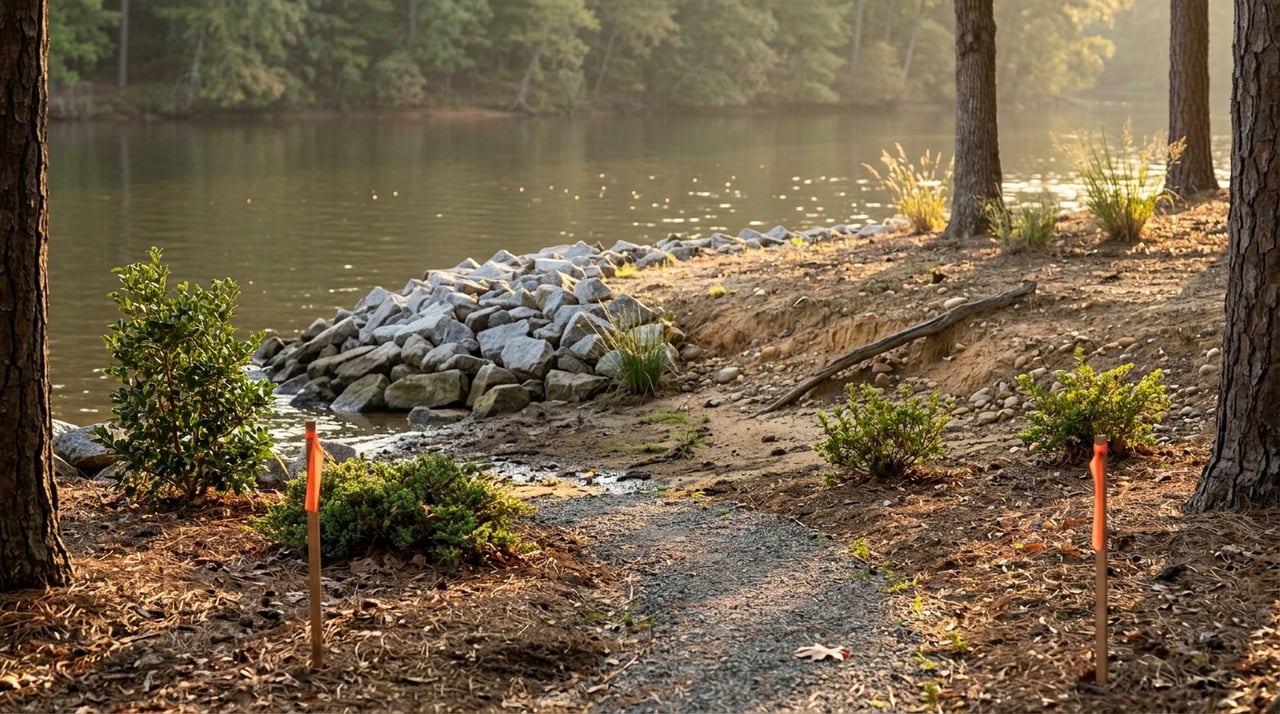
Dominion Energy regulates shoreline items like piers, docks, boatslips, boathouses, bulkheads, riprap, dredging, and vegetation work. Shoreline improvements require a Construction and Use License Agreement, and older structures may be licensed, grandfathered, or nonconforming.
That matters if you are considering a tear-down lot or a parcel with an older dock. An existing structure is not automatically a one-for-one replacement opportunity. Before you assume you can rebuild or expand what is already there, verify the current status and what Dominion will allow.
Understand clearing limits
Shoreline vegetation and access clearing can also affect the value of a lot. Dominion uses different shoreline management areas, and some areas limit clearing, require replanting, or do not allow vegetation removal at all.
If a lot’s appeal depends on opening up a bigger water view or creating easier shoreline access, you need to know those limits early. A heavily wooded lot may be beautiful, but the ability to change it could be restricted.
Study slope, drainage, and access
A waterfront lot can look perfect in listing photos and still turn into a costly build. Grade, drainage, and access often have a major impact on what the project will require.
Dominion states that structures must not adversely affect shoreline contours or slopes, and Northampton County treats items like retaining walls, decks, and gazebos as structural. If the site needs major grading, driveway work, retaining walls, or shoreline stabilization, your build cost can change quickly.
This is where practical due diligence matters. A lot with an easy building envelope and manageable slope may be more valuable to you than one with more shoreline but tougher site conditions.
Confirm the buildable footprint
A waterfront lot is only as useful as its buildable area. On Lake Gaston, that means looking beyond the shoreline to lot dimensions, orientation, soil conditions, and septic feasibility.
Septic and soil can shape the project
Northampton County’s zoning table ties residential lot area for septic lots to soil group, with minimums shown at 20,000, 40,000, or 80,000 square feet depending on category. In simple terms, two waterfront lots with similar size on paper may not offer the same building potential.
If you are planning a larger home, a garage, or a certain layout, confirm that the lot can support it. Septic authorization is part of the county permit process, so this is not something to leave for later.
Home orientation may not be automatic
Northampton County says homes should follow the predominant neighborhood pattern. Where no comparable structures exist, a waterfront home may face the water. The county also says waterfront accessory buildings in the front yard must use materials consistent with the principal structure or applicable HOA or covenant guidelines.
That means home orientation is partly a design choice and partly a zoning question. If your vision includes a certain approach to the driveway, garage placement, or outdoor living, make sure the lot and local rules support it.
Know the permit path before you offer
One of the biggest mistakes buyers make is assuming a waterfront lot is buildable simply because it is marketed that way. On Lake Gaston, you need to confirm both county requirements and shoreline approval requirements.
County permits in Northampton County
Northampton County says residential permits require septic authorization and zoning authorization. If the parcel is inside Gaston town limits, the town’s zoning authorization is required before the county can issue a building permit.
The county’s residential permit requirements apply to new homes, accessory buildings, demolitions, additions, alterations, and interior repairs. For larger tear-down or renovation projects, structural repairs and additions require permits, and projects at $30,000 or more require a North Carolina licensed general contractor plus a lien-agent appointment.
Shoreline approval is separate
Even if the county path looks clear, shoreline use still needs Dominion approval. For new construction near the shoreline, Dominion wants drawings and a map showing location relative to property boundaries. For work involving riprap, dredging, or vegetation manipulation, it requires project-specific drawings or measurements.
This is why a lot can be legally described as waterfront and still not support the improvements you assume are possible. If a dock, shoreline stabilization, or boathouse matters to you, verify that path before you commit.
Review water levels and flood risk
Waterfront living comes with changing conditions, and those conditions affect lot selection. It is important to understand both normal lake operations and flood-hazard information.
Dominion says Lake Gaston is typically maintained between 199 and 200 feet above mean sea level during normal operation, but levels can change without notice due to weather, customer demand, and upstream operations. It also notes that water above 200 feet can cover docks and inundate yards depending on property elevation.
You should also verify flood zone status before writing an offer. In North Carolina brokerage practice, flood zone status, restrictive covenants, and the existence of an HOA are material facts. Reviewing official flood-hazard information early can help you avoid surprises that affect use, insurance planning, or future improvements.
Do not skip HOA and covenant review
Waterfront buyers sometimes focus so much on the lake that they overlook private restrictions. On Lake Gaston, HOA rules and restrictive covenants can be just as important as public regulations.
Restrictive covenants can limit rental terms, RV parking, and other uses. Northampton County also references HOA or covenant guidelines for waterfront accessory-building materials. You should never assume that a neighboring dock setup, parking pattern, or rental use automatically applies to the lot you want.
For second-home buyers and investors in particular, this step is critical. If your plan includes vacation use, renovation, or future rental goals, make sure the governing documents align with your intended use.
Your pre-offer waterfront lot checklist
Before you submit an offer on a Lake Gaston waterfront lot in Gaston or Northampton County, verify these core items:
- Survey, plat, and easements so you understand boundaries and access
- Existing dock or bulkhead status to confirm whether improvements are licensed, grandfathered, or nonconforming
- Septic feasibility and site size to match your intended house size and layout
- Clearing and vegetation limits that could affect views, access, and landscaping
- Flood zone status and how elevation may affect the yard or dock
- HOA or covenant restrictions on rentals, parking, materials, or other uses
- Jurisdiction to confirm whether the parcel is in Gaston town limits or county-only jurisdiction
- Build plan alignment so county permits, Dominion review, and private restrictions all support your goals
How to buy with more confidence
The best Lake Gaston waterfront lot is not always the one with the longest shoreline or the widest view. It is the one whose shoreline conditions, slope, permitting path, and restrictions fit the way you actually plan to use the property.
That is where a more consultative buying approach can make a real difference. If you want help evaluating lot feasibility, shoreline questions, renovation potential, or offer strategy, Neal Anderson can help you sort through the details and move forward with clarity.
FAQs
What should you check before buying a Lake Gaston waterfront lot?
- Review the survey, plat, easements, septic feasibility, flood zone status, shoreline structure status, clearing limits, and any HOA or covenant restrictions before making an offer.
Can you rebuild or expand an existing dock on Lake Gaston?
- Not always. Dominion distinguishes between licensed, grandfathered, and nonconforming shoreline structures, so you should confirm the current status before assuming a dock can be rebuilt or enlarged.
Do Lake Gaston water levels affect waterfront lots?
- Yes. Dominion says lake levels typically stay between 199 and 200 feet during normal operation, but levels can change without notice, and higher water may inundate some docks and yards.
Is a waterfront lot in Gaston, NC automatically buildable?
- No. You should confirm septic authorization, zoning authorization, minimum lot-area compliance, and any separate shoreline approvals that may apply.
Do HOA rules matter for Lake Gaston waterfront land?
- Yes. HOA rules and restrictive covenants can affect rentals, parking, accessory-building materials, and other uses, so they should be reviewed before you buy.