Buying a Lake Gaston home can feel simple at first, until you realize there may be two timelines moving at once: the home purchase timeline and the shoreline or permit timeline. If you are buying in Gaston or elsewhere around Lake Gaston, understanding both can help you avoid surprises, protect your deadlines, and make smarter decisions during due diligence. This step-by-step guide walks you through what to expect, what can slow things down, and where careful planning matters most. Let’s dive in.
Start With Preapproval
Before you tour homes or write an offer, your first milestone is getting preapproved. The Consumer Financial Protection Bureau explains that a preapproval letter shows a lender is tentatively willing to lend up to a certain amount, helps show sellers you are serious, and often expires in 30 to 60 days.
For a Lake Gaston buyer, this is more than a box to check. It gives you a realistic price range before you start comparing waterfront homes, second homes, or properties that may need updates. It also helps you move faster when the right property comes along.
What to do at this stage
- Confirm your target budget and monthly comfort level
- Ask your lender how long your preapproval is valid
- Gather funds for due-diligence and earnest money if needed
- Think ahead about whether you may want renovations, dock changes, or other improvements after closing
Understand When the Contract Becomes Effective
Once your offer is accepted, the next key date is the effective date of the contract. In North Carolina, the due-diligence clock starts on that date, according to the North Carolina Real Estate Commission.
If your contract includes a due-diligence fee, it must be paid to the seller by the effective date. If a broker is holding and delivering that payment, it must be delivered promptly and no later than three business days after acceptance, as outlined by the same NCREC guidance.
This stage matters because your deadlines are now active. From here forward, your timeline is less about broad intentions and more about specific dates.
Use Due Diligence Wisely
In North Carolina, due diligence is the main investigation period. Rather than relying on a rigid inspection contingency structure, buyers typically use this negotiated period to evaluate the property and decide whether to move forward.
The NCREC states that buyers commonly use due diligence to investigate the home, pest issues, septic, survey, appraisal, title search, and loan qualification or application. Buyers may request repairs, but sellers do not have to agree.
If you terminate during the due-diligence period, you will usually receive your earnest money back, but you generally forfeit the due-diligence fee unless the contract says otherwise. That is why enough time matters.
Why timing is critical
The NCREC advises buyers to negotiate enough time to complete appraisal, loan approval, and repairs discovered during inspections. On a Lake Gaston property, that advice is especially important because the lake-specific items can add extra coordination.
A standard home purchase timeline may already involve inspections, underwriting, and title work. A waterfront property can add shoreline permits, surveys, well testing, septic review, or flood questions.
Expect a Second Timeline for Waterfront Issues
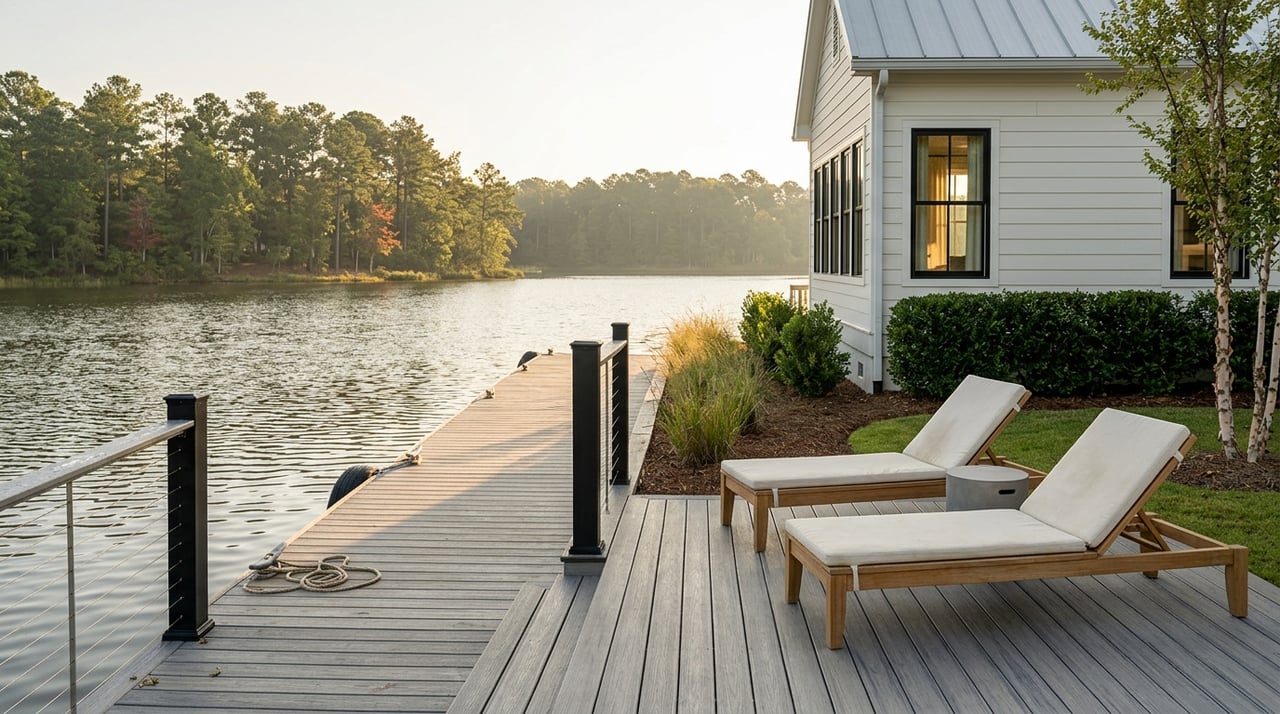
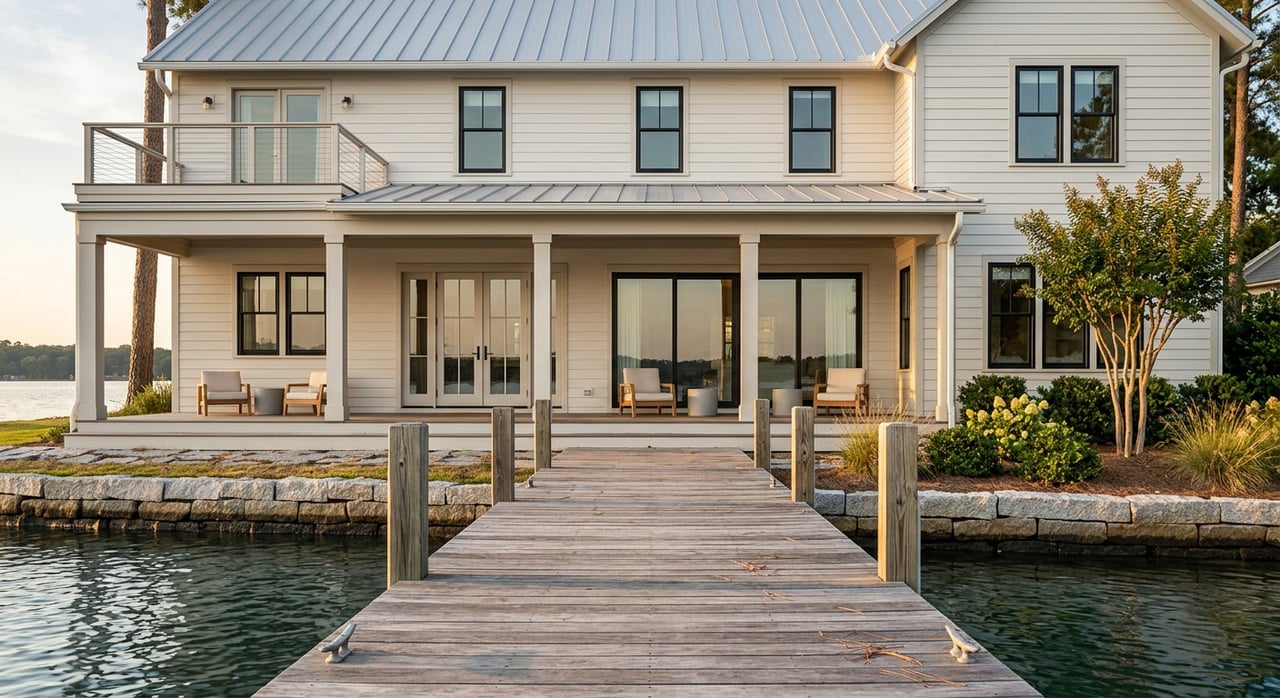
One of the biggest differences with Lake Gaston is that the home purchase may not be the only moving piece. If the property has an existing dock, boatslip, boathouse, riprap, or planned shoreline work, you may need to investigate Dominion Energy requirements at the same time.
According to Dominion Energy’s Lake Gaston permitting information, shoreline use permits or license agreements may be required for structures and activities near the shoreline. Their construction and use procedures also explain that Dominion controls shoreline property up to the project boundary.
That means a dock or shoreline feature is not something you should assume transfers seamlessly without review. If the property includes an existing structure, or if you hope to build or change one later, this should be part of your due-diligence planning.
What to verify about docks and shoreline structures
- Whether an existing dock, pier, boatslip, or boathouse has the proper permit or license agreement
- Whether a transfer of an existing structure will require proof of ownership, a deed, and a drawing or photo
- Whether your future plans would require new drawings showing dimensions and placement relative to property boundaries
- Whether any planned work may also need review by the U.S. Army Corps of Engineers
- Whether local county permits would be needed before work begins
Dominion’s procedures also state that each waterfront parcel or residential lot is limited to one pier, dock, boatslip, or boathouse combination structure, and that the structure footprint may not exceed 1,250 square feet. Those rules can affect what is possible, even after you own the home.
Prioritize Inspections and Property Condition
Every buyer wants confidence in the property condition, but lake homes often need an even more careful review. The NC REALTORS buyer advisory recommends a licensed home inspector for the general inspection, a licensed pest inspector when appropriate, a licensed on-site wastewater inspector for septic systems, and a North Carolina registered surveyor when a survey is needed.
These recommendations are especially relevant around Lake Gaston because waterfront lots often involve site-specific questions. Boundary clarity, septic location, grading, shoreline improvements, and stormwater flow can all shape how you evaluate the property.
Common diligence items for Lake Gaston buyers
- General home inspection
- Pest inspection when appropriate
- Septic inspection
- Survey review or new survey if needed
- Appraisal and lender conditions
- Title search
- Flood zone review
If issues come up, you may decide to request repairs, ask for credits, renegotiate, or walk away before the due-diligence period ends. The key is making sure your contract gives you enough time to gather the facts.
Check Flood, Well, and Septic Early
Waterfront buyers should investigate flood exposure early in the process. The NC REALTORS buyer advisory advises buyers to determine whether a property is in a Special Flood Hazard Area and whether flood insurance may be advisable or required by the lender.
If the home uses a private well, move quickly on water-quality questions. The North Carolina Department of Health and Human Services says newly constructed private wells must be tested before use as a drinking-water source, and existing wells should be tested regularly. Testing may be done through the local health department or a state-certified lab.
North Carolina also began requiring sellers in July 2024 to disclose whether private well water has ever been tested and, if so, the date of that test, according to the same NCDHHS guidance. For buyers, that makes early review of disclosures even more important.
Prepare for Settlement and Closing
As your transaction moves forward, it helps to understand that settlement and closing are related but not identical. NC REALTORS explains that settlement is the signing and delivery of documents and funds to the closing attorney, while closing is complete only after the title update and recording of the deed and any deed of trust.
In North Carolina, the buyer typically selects and pays the closing attorney. Unless the contract says otherwise, possession usually transfers at closing.
Final steps before closing
- Complete lender conditions and final loan approval
- Confirm title work is finished
- Review closing figures with your attorney and lender
- Schedule your final walk-through
- Verify any written repair agreements or included items
The final walk-through matters because NC REALTORS notes that closing generally means acceptance of the property in its current condition unless the parties have a written agreement stating otherwise.
Know That Delays Can Happen
Even well-managed transactions can hit a timing issue near the finish line. According to NC REALTORS, the standard contract can allow up to 14 calendar days to complete settlement and closing if a party is delayed, as long as that party acts in good faith, uses reasonable diligence, and gives notice as soon as possible.
For Lake Gaston buyers, this is one more reason to think in terms of deadlines instead of a single perfect closing day. Appraisal issues, title questions, survey corrections, lender conditions, or shoreline documentation can all affect the final stretch.
Plan Ahead for Post-Closing Projects
If you are buying with plans to renovate right away, add an accessory structure, or make site improvements, Northampton County may add another timeline layer. The county states that residential building permits require septic authorization and zoning authorization, and if the property is inside the town limits of Gaston, the town’s zoning authorization must be obtained before the county will issue the building permit.
According to Northampton County’s residential permit requirements, plan review is required before permit issuance, and buyers should allow about five days. If your improvement plans also involve shoreline work, that county timeline may run alongside Dominion’s process rather than replace it.
A Simple Lake Gaston Timeline to Follow
Here is a practical way to think about the process:
Before you offer
- Get preapproved
- Set your budget
- Identify any must-have waterfront features
Right after acceptance
- Confirm the effective date
- Deliver any due-diligence fee as required
- Schedule inspections and lender next steps
During due diligence
- Inspect the home, septic, pests, survey, and title
- Review flood, well, and shoreline questions
- Investigate dock or shoreline permits if applicable
- Decide whether to negotiate, proceed, or terminate before the deadline
Near closing
- Clear final loan and title conditions
- Complete the walk-through
- Sign settlement documents
- Wait for deed recording to confirm closing is complete
After closing
- Start any permit applications for renovations or new improvements
- Confirm county and shoreline approval steps before construction begins
Buying at Lake Gaston can be exciting, but it also rewards careful planning. When you understand how the home purchase timeline and waterfront diligence timeline can overlap, you are in a much stronger position to make confident decisions and avoid unnecessary stress. If you want steady guidance from the first showing through closing and beyond, connect with Neal Anderson for a personalized consultation.
FAQs
What starts the due-diligence timeline when buying a Lake Gaston home?
- In North Carolina, the due-diligence period starts on the effective date of the contract, according to the North Carolina Real Estate Commission.
What should buyers inspect during a Lake Gaston home purchase?
- Buyers commonly investigate the home’s condition, pest issues, septic, survey, appraisal, title, loan qualification, flood questions, and any waterfront-specific concerns during due diligence.
What dock issues should buyers review for a Lake Gaston waterfront property?
- Buyers should verify whether existing or planned docks, piers, boatslips, boathouses, or shoreline improvements require a Dominion Energy shoreline use permit or license agreement.
What is the difference between settlement and closing in North Carolina?
- Settlement is the signing and delivery of documents and funds, while closing is complete only after title is updated and the deed and any deed of trust are recorded.
What permit steps matter after buying a home in Gaston, NC?
- Northampton County says residential building permits require septic authorization and zoning authorization, and properties inside Gaston town limits need the town’s zoning authorization before the county can issue the permit.