Trying to choose between a lakefront home and an off-water home in Halifax County? That decision often comes down to more than views and price. You want a property that fits your lifestyle, your budget, and the level of upkeep you are comfortable with. This guide will help you compare both options around Lake Gaston so you can make a more confident move. Let’s dive in.
Lake Gaston sets the stage
Halifax County is home to part of Lake Gaston, one of the area’s biggest draws for boating, fishing, and outdoor recreation. The lake spans about 34 miles, covers more than 20,000 acres of water, and includes roughly 350 miles of shoreline touching Halifax, Warren, and Northampton counties.
That scale matters when you start shopping. A home can feel “close to the lake” in several different ways, but not every property offers the same access, rights, or responsibilities. In Halifax County, that distinction is especially important.
What lakefront really means here
In the Lake Gaston market, lakefront does not simply mean your lot sits next to the water. Along the shoreline, Dominion Energy owns land up to the project boundary, and many new or modified shoreline structures require a Construction and Use License Agreement.
That means a true lakefront purchase involves more than a pretty view. You also need to understand shoreline rights, existing permits, property covenants, and whether county or HOA approvals apply. If you are comparing homes, this is one of the biggest reasons a careful review matters.
Why access details matter
Two properties can both look attractive online and still offer very different ownership experiences. One may have a properly licensed dock or approved shoreline improvements, while another may have limitations on what you can change in the future.
For buyers, that can affect both enjoyment and long-term value. For sellers, clear documentation can make a waterfront listing easier to explain and market.
Price differences are substantial
If your budget is driving the decision, the gap between these two categories is hard to ignore. According to a 2025 local MLS-based market update, waterfront home closings averaged $959,087, with a median sales price of $832,500.
In that same report, off-water home closings averaged $219,323, with a median sales price of $201,000. The report excluded private sales, so it works best as directional market data, but the difference is still striking.
A quick price comparison
| Home type | Average sale price | Median sale price |
|---|---|---|
| Waterfront homes | $959,087 | $832,500 |
| Off-water homes | $219,323 | $201,000 |
For many buyers, this is the clearest starting point. If lakefront pricing pushes beyond your comfort zone, an off-water property may offer a practical way to enjoy the Lake Gaston lifestyle without paying the full waterfront premium.
Carrying costs can look very different
Higher purchase prices usually mean higher ongoing costs. Using Halifax County’s FY 2025-2026 property tax rate of $0.70 per $100 of assessed value, the county-tax portion alone would be about $5,827.50 on a median-priced waterfront home and about $1,407.00 on a median-priced off-water home.
That is a difference of about $4,420.50 per year in county taxes alone, before any municipal levies or special assessments. When you compare homes, it helps to look beyond the mortgage payment and think about the full cost of ownership.
Lifestyle benefits of lakefront homes
The biggest reason buyers choose lakefront is simple. You get direct access to the water.
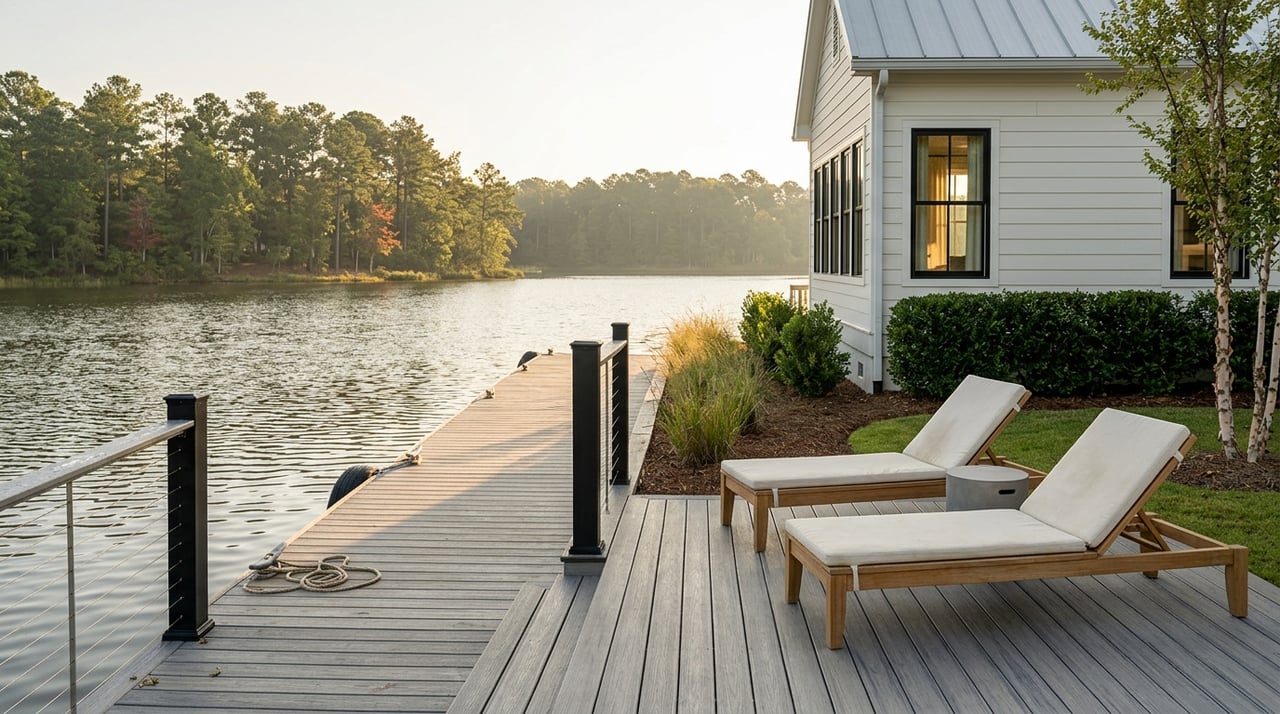
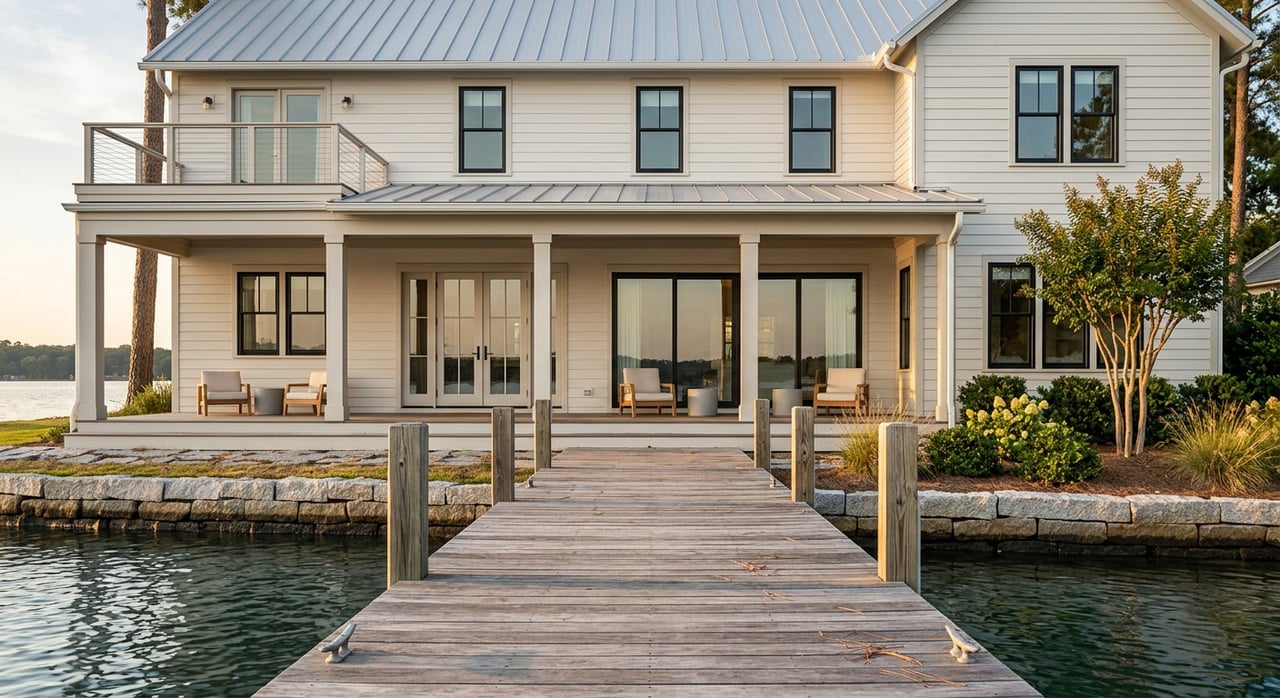
That can mean easier boating, quicker fishing trips, and views that are hard to match. Instead of driving to a public access point, you may be able to step outside and enjoy the lake from your own property.
For many second-home buyers, that convenience is the whole point. If your ideal day includes launching a boat with little effort or spending evenings overlooking the water, lakefront living can be hard to beat.
Lakefront can feel more immersive
There is also an experience factor that matters. Living directly on the shoreline often creates a stronger connection to the lake itself, from sunrise views to easier guest entertaining.
That said, the appeal comes with added complexity. In Halifax County, the lifestyle upside and the ownership details go hand in hand.
Lakefront tradeoffs to consider
Waterfront ownership usually brings more moving parts. Dominion Energy notes that water levels can change based on weather and operations, and residential docks can be covered during flood-control operations when levels rise above 200 feet.
Their shoreline procedures also address issues like bulkheads, riprap, vegetation clearing, and structure approvals. That does not mean every lakefront property will need major work, but it does show that shoreline ownership often requires more oversight than an off-water lot.
Maintenance is often more involved
If you buy lakefront, you may need to pay closer attention to erosion, shoreline stability, and the condition of any existing structures near the water. You may also need to confirm permit history before making changes.
This is where buyers benefit from a careful, property-specific review. A waterfront home can be a great fit, but you want to understand what comes with it before you commit.
Why off-water homes appeal to many buyers
Off-water homes can offer a very different kind of value. The lower price point is a major draw, but it is not the only advantage.
Many buyers also like the idea of fewer shoreline-related obligations. Without direct waterfront improvements to maintain, ownership may feel simpler and more predictable.
Off-water does not always mean no lake access
This is one of the most important points in the Halifax County market. An off-water home may still include deeded access, shared access, or community-based lake access.
Dominion’s procedures specifically contemplate non-waterfront lots with lake access through a dedicated waterfront lot in general development areas. So if your goal is to enjoy Lake Gaston without paying lakefront pricing, an off-water home can still be a strong option.
Which option fits your goals?
The better choice depends on how you plan to use the property. If direct water access is your top priority and your budget supports the added cost and upkeep, lakefront may be worth the premium.
If you care more about affordability, simpler ownership, or occasional lake use, an off-water home may check more boxes. You can still enjoy the area’s recreation benefits while keeping your upfront and ongoing costs lower.
Lakefront may fit you if you want:
- Direct access to the water
- Stronger view-oriented lifestyle benefits
- Easier boating from home
- A second home centered around the shoreline experience
Off-water may fit you if you want:
- A lower entry price
- Lower county tax exposure based on price
- Fewer shoreline-specific responsibilities
- Shared, deeded, or community lake access instead of private frontage
What buyers should review before making an offer
Whether you choose lakefront or off-water, due diligence matters. In this market, a home’s access rights and permit history can affect how usable the property really is.
Before moving forward, it helps to review:
- Whether the property is truly waterfront or simply water-access
- Any recorded covenants or HOA restrictions
- Existing shoreline licenses and transfer steps, if applicable
- Whether county or HOA approvals may be needed for future changes
- The practical cost difference between purchase price and ongoing ownership
Rental potential adds another layer
Some Lake Gaston buyers are shopping for second homes and occasional rentals, so income potential often enters the conversation. In Halifax County, that analysis should include more than projected rent.
The county levies a 5% occupancy tax on rooms and lodging rentals. If you are evaluating a property for short-term rental use, you will also want to factor in HOA rules, maintenance costs, and any shoreline approval requirements tied to the property.
Clear rights make rental planning easier
For either home type, rental potential is strongest when access rights, covenants, and permit history are clear. A home that looks appealing in photos may be less flexible in practice if those details are uncertain.
That is one reason buyers often benefit from a more consultative approach in this market. The lifestyle side is exciting, but the technical side matters too.
If you are weighing lakefront versus off-water homes in Halifax County, the right answer usually comes from matching the property to the way you actually want to live and use it. A smart purchase is not just about getting on or near the water. It is about understanding what you are buying, what it will cost to own, and how well it supports your goals over time. If you want help comparing options around Lake Gaston, Neal Anderson can help you evaluate the details with clarity and confidence.
FAQs
What is the difference between lakefront and off-water homes in Halifax County?
- Lakefront homes have direct frontage on Lake Gaston, while off-water homes do not sit directly on the shoreline and may rely on deeded, shared, or community lake access.
Are Halifax County lakefront homes much more expensive than off-water homes?
- Yes. A 2025 local MLS-based market update reported a median sale price of $832,500 for waterfront homes versus $201,000 for off-water homes.
Can an off-water home near Lake Gaston still offer lake access?
- Yes. Some off-water properties can include deeded or community-based access, which lets you enjoy the lake without buying direct waterfront frontage.
Do all Halifax County lakefront lots allow docks or boathouses?
- No. Shoreline work on Lake Gaston is regulated, and approvals can depend on Dominion Energy rules as well as county and HOA requirements.
Are lakefront homes in Halifax County harder to maintain?
- They can be. Waterfront ownership may involve more shoreline-related attention, including erosion concerns, water-level exposure, and approvals for certain structures or improvements.
Should Halifax County buyers consider rental rules before buying a lake home?
- Yes. Buyers considering short-term rental use should review occupancy tax, HOA rules, maintenance needs, and whether the property’s access and shoreline documentation are clear.